By Francois Vorster, Chief Disruptor at IMS Ad Agency
When I first gained access to OpenAI in December 2022, I understood immediately that this technology could fundamentally change how people search for information. Most of the conversation at the time focused on AI’s ability to write, answer questions or help with everyday tasks. What interested me more was its potential to replace a meaningful share of traditional Google and Bing searches; letting someone ask a detailed question and get a clear, consolidated answer instead of opening ten tabs to piece one together themselves.
That shift felt inevitable. I believed AI querying would become a normal part of how people research and buy; finding companies, comparing products, shortlisting suppliers, deciding who to contact. So, IMS started investing in GEO from that point in December 2022.
From Keywords to Questions
Traditional search usually starts with a short keyword or phrase. A person might search Google for:
- “digital marketing agency Fourways”
- “online grocery delivery South Africa”
- “SEO company Johannesburg”
AI search is more conversational and specific. The same person might instead ask:
- “Which digital marketing agency in Fourways offers GEO and can help my business appear in ChatGPT?”
- “Which South African online grocery service offers fast delivery and a broad product range?”
- “Recommend a Johannesburg agency that provides SEO, Google Ads, analytics and AI-search optimisation.”
These aren’t just longer keywords. They carry context about the user’s needs, location, expectations and intended outcome ; which changes what a business has to do online. It’s no longer enough to mention a service a few times on a page. A business needs to make it easy for AI platforms to understand who it is, what it offers, where it operates, who it serves, what problems it solves, why it should be trusted, and how it differs from competitors.
That’s the foundation of Generative Engine Optimisation, or GEO.
We Invested Before GEO Had a Name
In 2022, GEO wasn’t yet a formal discipline, but the opportunity was already obvious: if customers were going to ask AI tools for recommendations, businesses would need to improve how they were represented inside those answers.
We began experimenting with what actually shaped AI-generated responses, and how platforms interpreted company information, which sources they leaned on, how clearly brands were described, and why some businesses showed up while others didn’t. We also started rethinking how traditional SEO principles would need to evolve. Technical SEO, content and backlinks would still matter, but AI systems demanded sharper entity clarity, more direct answers, and tighter alignment between a company’s website and its wider digital footprint.
GEO Is More Than Adding AI Keywords
GEO sometimes gets treated like a new style of content writing. In practice it’s broader than that, it requires clear, consistent information across multiple signals, not just the right words on a page.
At IMS, our GEO approach includes:
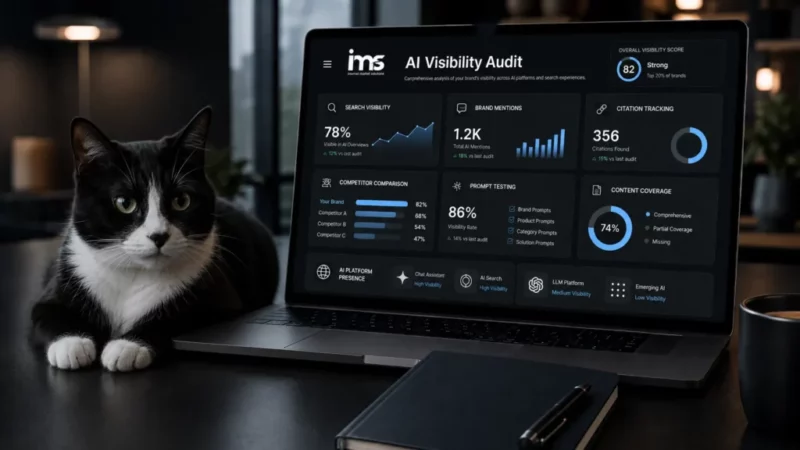
- AI visibility audits
- Conversational query research
- Entity and service clarity
- Technical SEO
- Structured website content
- Frequently asked questions
- Comparison and decision-stage content
- Case studies and proof
- Reviews and third-party mentions
- Digital PR and authority development
- Local relevance
- AI visibility monitoring
An e-commerce retailer, for example, should clearly explain what products it sells, where it delivers, how payments work, whether products are in stock, what its returns policy is, and which customers its products suit. A vague line like “we offer excellent products and service” tells an AI platform, or a customer almost nothing. Specific, verifiable information is worth far more.
Building Visiblora to Monitor AI Visibility
You can’t improve what you don’t measure. That’s why IMS built Visiblora, our AI listening and visibility tool, to track how brands perform for selected queries across AI platforms.
Visiblora monitors:
- Whether a brand appears in AI-generated answers
- Which competitors are being recommended instead
- How accurately a company is described
- Which queries generate visibility, and which don’t
- Which sources may be influencing the answer
- How visibility changes over time
That gives GEO an actual measurement framework, a baseline, clear gaps, and a way to track progress instead of publishing content and hoping it works.
AI Search Is Now Part of the Customer Journey
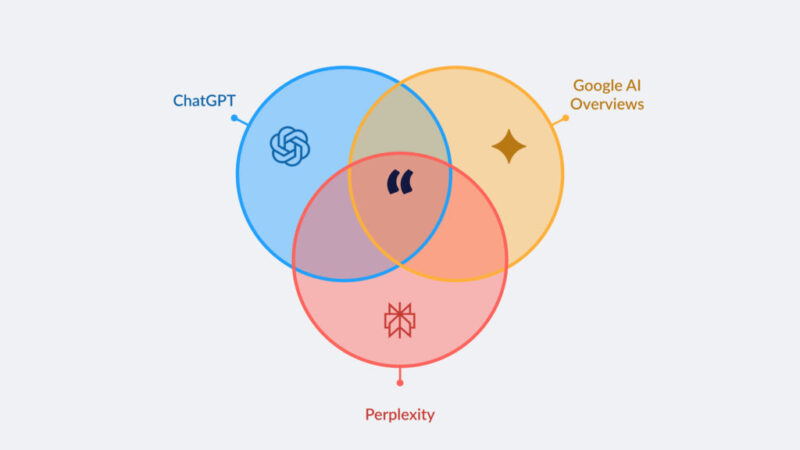
Google and Bing aren’t disappearing, and SEO isn’t going anywhere. But AI querying is becoming an additional layer in how people research and decide. A customer might start with ChatGPT, Gemini, Copilot or Perplexity, move to Google to verify what they’ve learned, check a website and reviews, and only then make contact. The journey is getting more fragmented and more conversational, which means businesses need visibility across both traditional search and AI-generated answers.
That’s why IMS doesn’t treat GEO as a replacement for SEO. We build it alongside technical SEO, content strategy, website development, digital PR, analytics and paid media, not instead of them.
Where This Leaves Us
IMS didn’t start offering GEO because it became a popular acronym. Our interest goes back to December 2022, when AI querying first showed us how people would discover and choose businesses differently, and we spent the years since experimenting, learning and building the processes and monitoring tools to act on it.
Today we deliver Generative Engine Optimisation from our Fourways office to clients across Sandton, Johannesburg, Gauteng and the rest of South Africa. The platforms will keep changing, and so will the way AI systems select, summarise and recommend information. Our job is to help clients keep pace with that and make sure that when someone asks an AI which company to choose, our clients are the answer.
GEO may be a new name but for IMS, it isn’t a new focus.